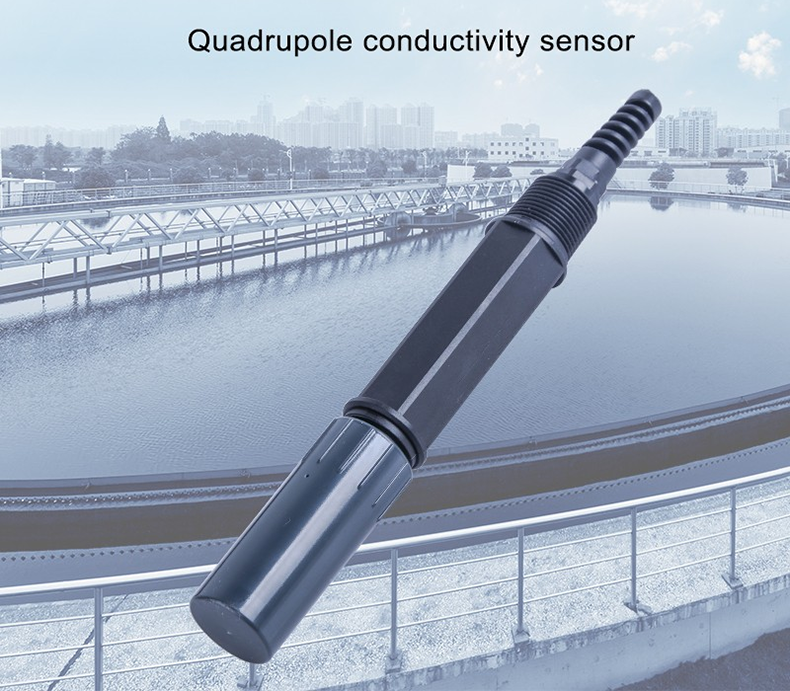

TDS7002 4 Electrodes Conductivity Sensor for EC and TDS Measuring

Introduction
The TDS7002 4-electrode Sensor is a robust analytical instrument designed to overcome the limitations of standard two-electrode systems, particularly in highly conductive or heavily contaminated media.
In applications such as wastewater, brine, and high-mineral-content process water, traditional sensors suffer from electrode polarization and surface fouling, resulting in significant measurement drift and inaccuracy.
The TDS7002 employs the advanced 4-electrode method to isolate the measurement circuit from the excitation circuit, ensuring that resistance from cable connections, electrode contamination, and polarization boundary layers does not compromise the reading. This intelligent design ensures long-term stability and high accuracy (±1 % FS) across its entire, expansive measurement range, making it the benchmark for reliable industrial liquid analysis.
Key Features
| Feature | Technical Specification / Benefit |
| Measurement Principle | Four-Electrode Method |
| Measurement Function | Conductivity (EC), TDS, Salinity, Temperature |
| Accuracy | ±1%FS(Full Scale) |
| Wide Range | Up to 200,000 µS/cm(200mS/cm) |
| Material Integrity | PEEK (Polyether Ether Ketone) or ABS Housing |
| Temperature Rating | 0-130°C(PEEK) |
| Pressure Rating | Max 10 Bar |
| Temperature Compensation | NTC10K Built-in Sensor for Automatic Compensation |
| Installation Thread | NPT 3/4 inch |
| Protection Rating | IP68 Ingress Protection |
Working Principle
The TDS7002 utilizes the 4-electrode potentiometric method, a technological upgrade from the traditional two-electrode system:
1. Excitation Electrodes (Outer Pair): An alternating current (AC) is applied via the outer two electrodes (C1 and C2). This establishes a stable current field within the measured solution.
2. Measuring Electrodes (Inner Pair): The inner two electrodes (P1 and P2) function as potentiometric probes. They measure the precise voltage drop across a fixed volume of the solution.
3. Error Elimination: Because the inner electrodes draw virtually no current, they are not subject to the polarization or fouling effects that plague current-carrying two-electrode systems. The measurement of voltage drop is therefore pure and solely dependent on the solution’s properties.
4. Calculation: The conductivity is calculated based on the ratio of the applied AC (from C1/C2) to the measured AC voltage (across P1/P2), allowing for accurate, wide-range measurement regardless of electrode contamination or lead wire resistance.
Specification
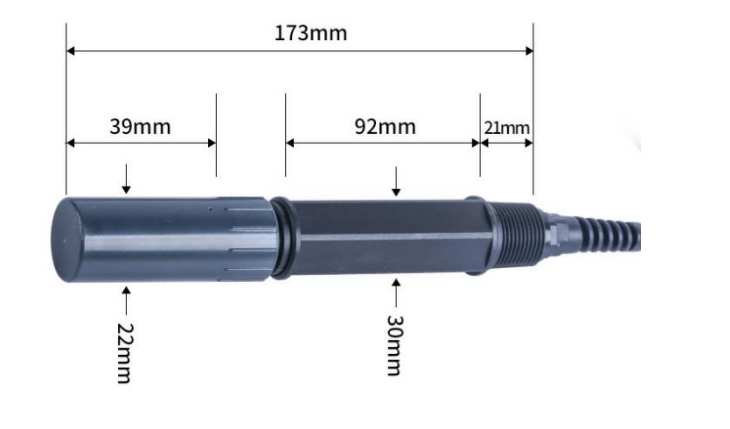
| Product | 4 Electrodes conductivity sensor |
| Model | TDS7002 |
| Measure range | 10us/cm~500ms/cm |
| Accuracy | ±1%FS |
| Thread | NPT3/4 |
| Pressure | 5 bar |
| Material | PBT |
| Temp compensation | NTC10K (PT1000, PT100, NTC2.252K optional) |
| Temperature range | 0-50℃ |
| Temperature accuracy | ±3℃ |
| Ingress protection | IP68 |
Applications
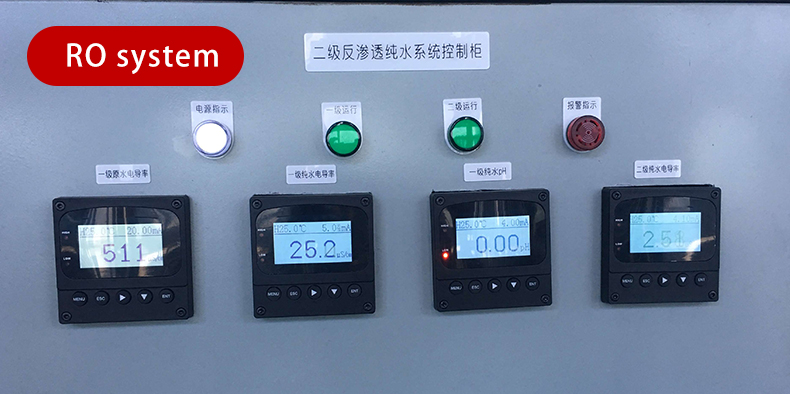
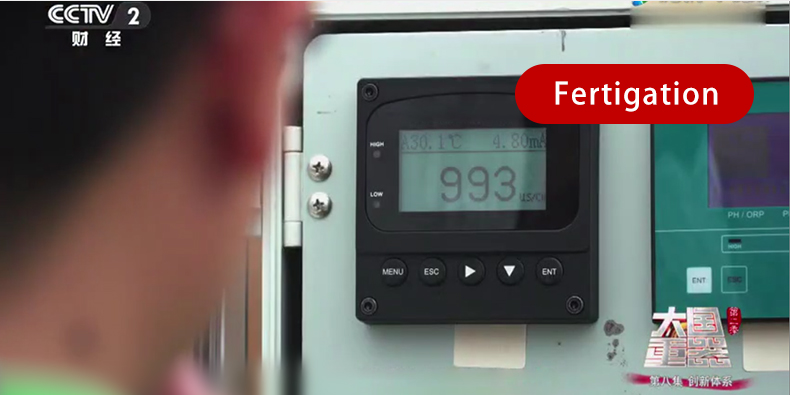
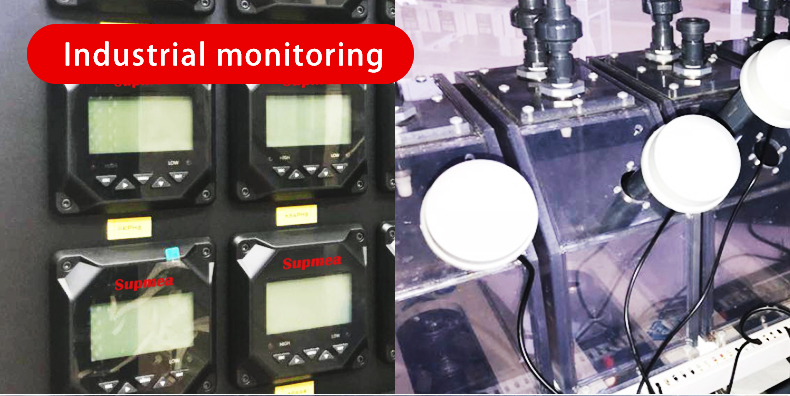
The enhanced resilience and measurement stability of the TDS7002 conductivity sensor make it indispensable in applications where high conductivity, fouling, or extreme conditions are present:
·Wastewater Treatment: Continuous monitoring of effluent and industrial discharge streams that contain high concentrations of solids and salts.
·Industrial Process Water: Tracking conductivity in cooling tower water, recirculating water systems, and acid/alkali concentration measurement, where chemical resistance is essential.
·Desalination & Brine: Accurate measurement of highly saline water, seawater, and concentrated brine solutions where polarization effects are maximized.
·Food & Beverage: Quality control in processes involving high-concentration liquid ingredients or cleaning solutions.