
R6000F Paperless Recorder 36 Channels of Universal Input for Industry Data Logging


Introduction
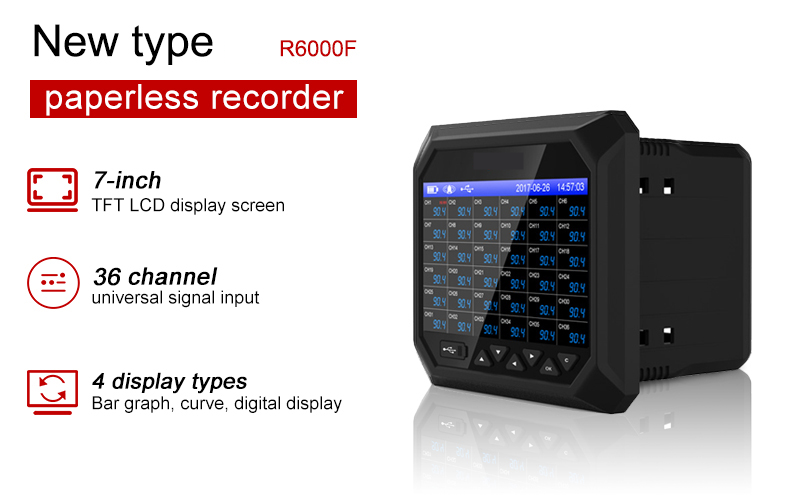
The R6000F paperless recorder integrates core recorder functions like measurement, processing, display, alarm, and recording to centralize process data in a single panel-mount instrument. It supports 36 analog signal input channels, 8 relay alarm outputs, a 24 VDC / 150 mA distribution output, two RS-485 interfaces, and a USB interface for data dump/export.
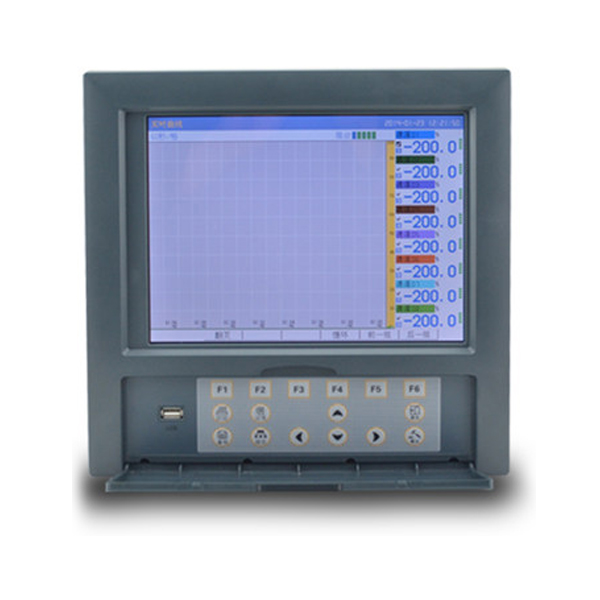
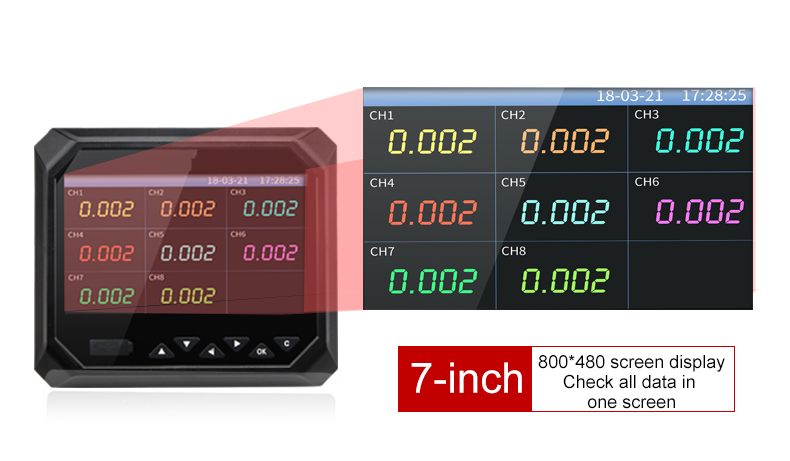
On the front end, the data-logging recorder without paper uses a 7-inch TFT true-color LCD (800×480) and multiple screen styles, allowing operators to read trends and values quickly during production. It includes internal Flash storage (128 MB) and supports a USB disk for handling external data, which is useful for audits, batch records, and maintenance reports.
For stable long-term service, the device uses a 32-bit ARM9 processor, and its circuit board is treated with anti-corrosion, moisture-proof, and dust-proof coating, with a power design intended to improve resistance to industrial interference/harmonics.
Working principle
The R6000F non-paper signal recorder works by collecting process signals from sensors/transmitters, converting them into readable engineering values, showing them on-screen in real time, and saving the data for later review, export, or system integration.
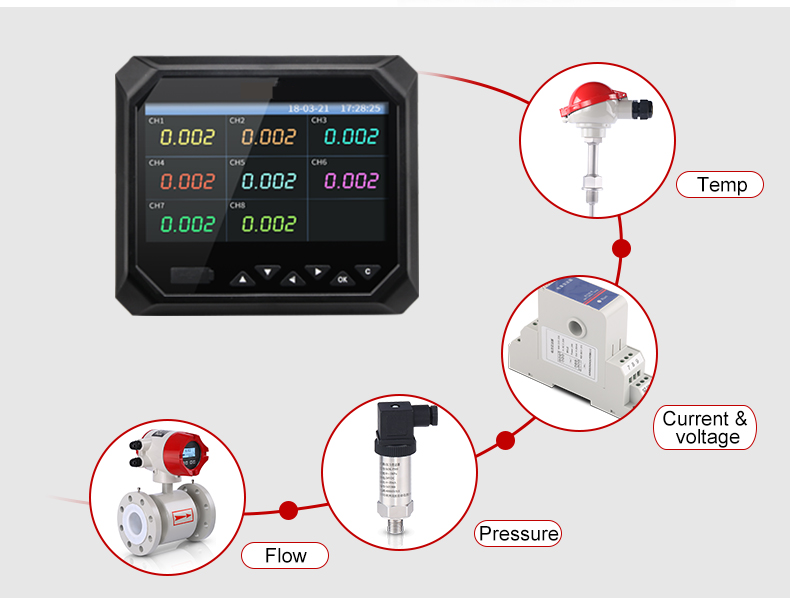
- 1. Signal acquisition (multi-type universal inputs): The recorder accepts common industrial signals such as DC voltage/current, thermocouples, and RTD inputs (e.g., Pt100, Cu50). These signals are brought into the recorder through its input channels and measured according to the selected input type and range.
- 2. Processing and computation: A high-performance 32-bit ARM9 microprocessor performs measurement processing and system operations. This enables stable sampling, real-time display refresh, alarm evaluation, and data logging.
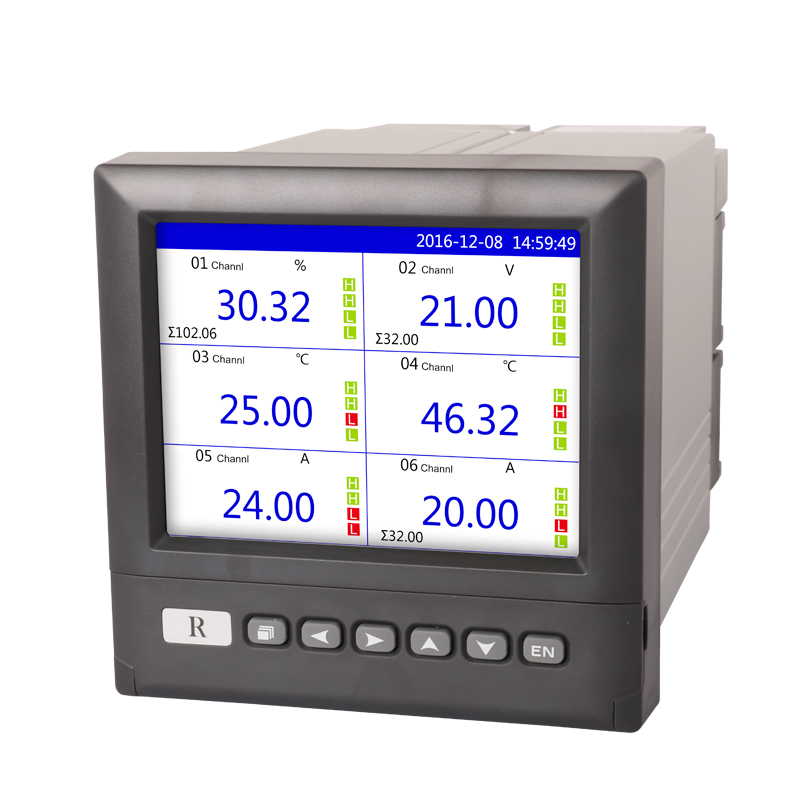
- 3. Display and operator visibility: Process values and trends are presented on the 7-inch TFT color screen with multiple visualization options (including bar graph, curve, and digital display), making it easier to spot drift, spikes, or out-of-limit conditions.
- 4. Alarm execution and outputs: When values meet alarm conditions, the recorder can trigger relay alarm outputs (up to 8 channels, normally open contacts, 2A/250VAC) to drive external annunciation or interlock logic.
- 5. Data recording and export/communication: Recorded data is stored in flash memory with power-off protection, and can be exported through USB. For automation networks, the recorder provides RS-485 communication using Modbus protocol (Modbus-RTU noted on the product page) to share real-time or historical values with external systems.
Key features
Designed for multi-point monitoring and long-term traceability, the R6000F paperless data recorder combines flexible signal input, clear visualization, reliable storage, and practical connectivity to fit both standalone recording and PLC/SCADA-linked applications.
- Up to 36 universal input channels for consolidating multiple process variables in one recorder.
- 7-inch TFT true-color display (800×480) for clear numeric readings and trend curves.
- Multiple display formats, such as trend/curve view, bar display, and digital display, to match different operating needs.
- 8 relay alarm outputs for high/low alarms and event signaling to external devices.
- Dual RS‑485 communication with Modbus‑RTU support for integration with PLC/SCADA systems.
- USB interface for data export to quickly copy records for reporting, troubleshooting, or audits.
- Internal flash storage (128 MB) for historical data logging with power-loss protection.
- 24 VDC / 150 mA transmitter power output for powering compatible field transmitters (within the rated limit).
- Industrial reliability design, including protective PCB coating and improved anti-interference power design for plant environments.
Specification
| Product | Paperless recorder |
| Model | R6000F |
| Display | 7-inch TFT display screen |
| Input | Up to 36 channels of universal input |
| Relay output | 2A/250VAC, Max 8 channels |
| Weight | 1.06kg |
| Communication | RS485, Modbus-RTU |
| Internal memory | 128 Mbytes Flash |
| Power supply | (176~264)VAC,47~63Hz |
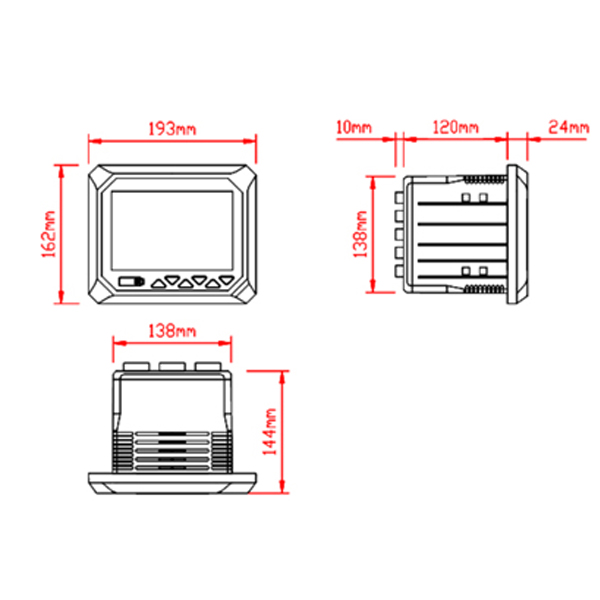
| Dimensions | 193*162*144mm |
| Shorter mounting depth | 144mm |
| DIN panel cutout | 138*138mm |
Applications
R6000F is suited for operations that need multi-point data logging, operator trend visibility, and traceable history across production and utility systems. Typical industries and scenarios include:
- Metallurgy & heat treatment: multi-zone temperature recording, furnace profiling, and alarm-based deviation monitoring.
- Petroleum & chemical processing: centralized logging of key process variables with RS-485 Modbus connectivity for control-room visibility.
- Building materials (cement, glass, etc.): kiln temperature tracking, process stability trending, and shift-based performance review.
- Pulp & paper manufacturing: monitoring utilities and production conditions where continuous historical records help reduce downtime.
- Power & energy systems: multi-point monitoring for auxiliary systems and test benches with easy USB data export.
- Food & pharmaceutical plants: batch or process recordkeeping where clean, readable historical trends support QA review (noting the manual states it is not for explosion-proof occasions).
- Industrial water treatment: logging sensor/transmitter signals and using alarms for out-of-spec events.