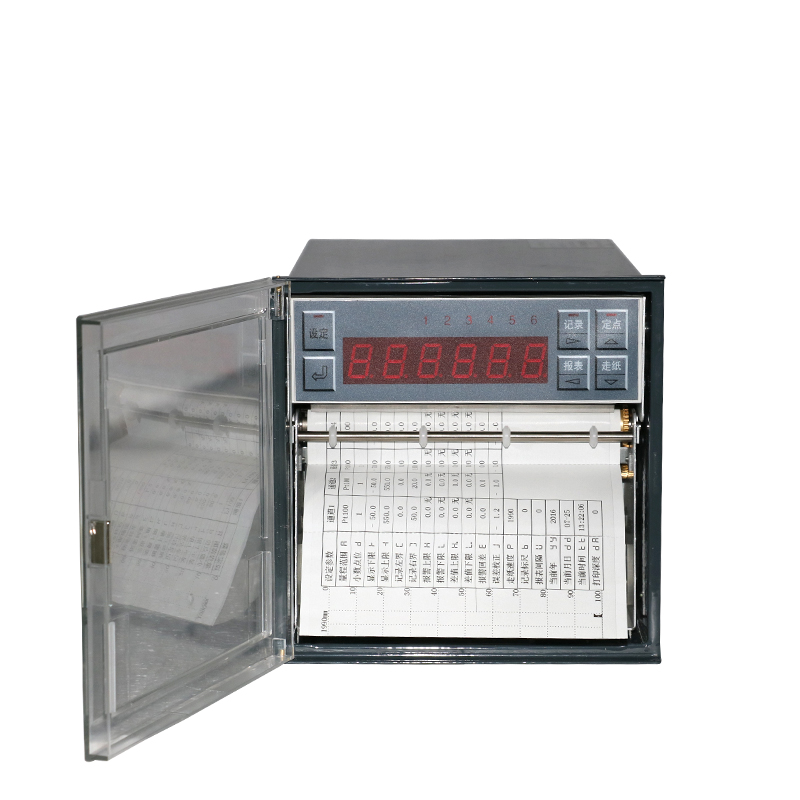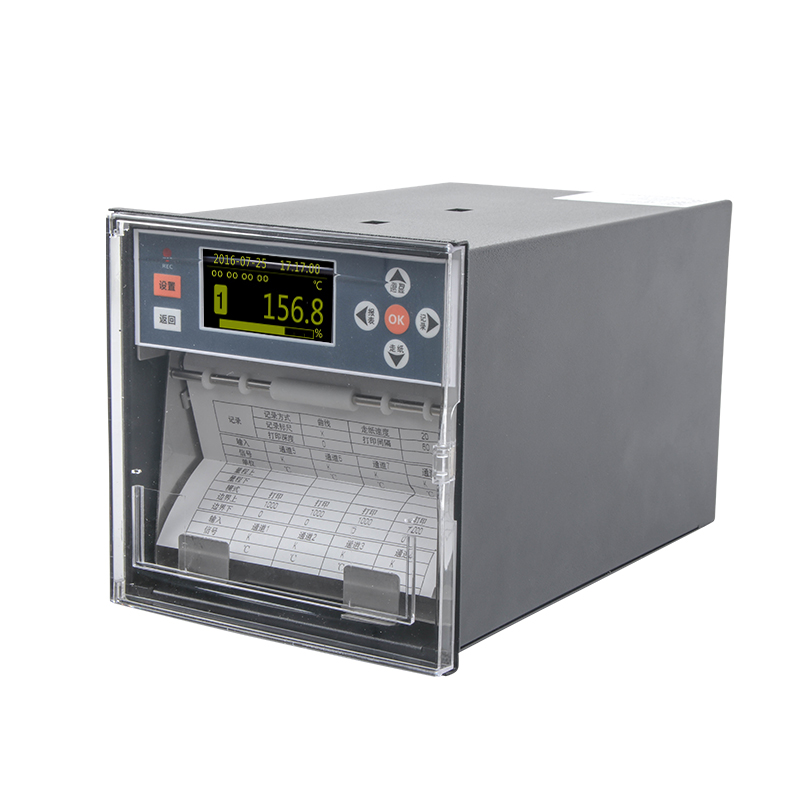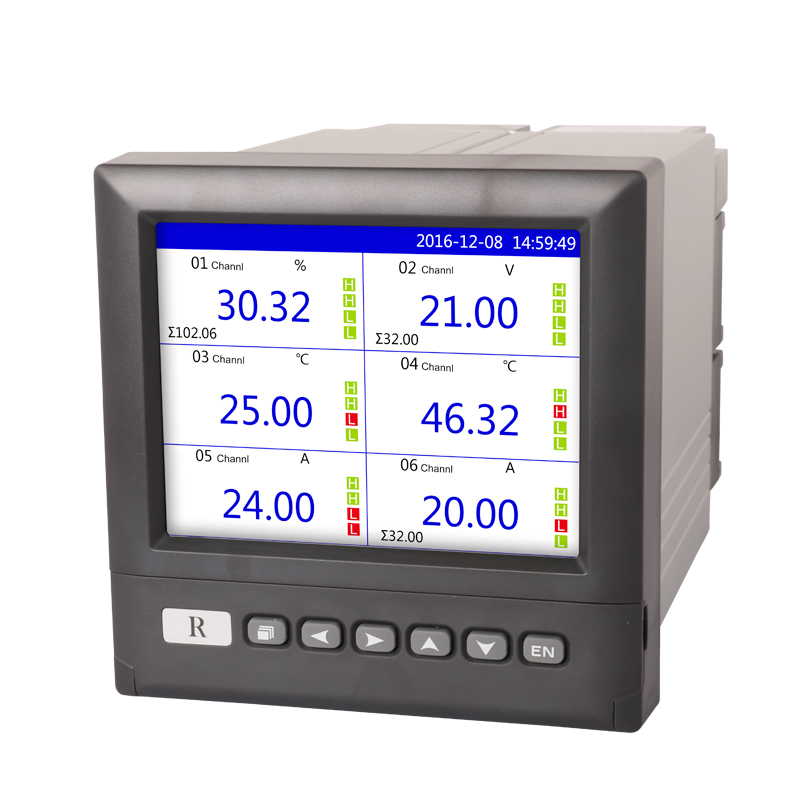

R1000 Strip Chart Recorder: Multi-Channel Industrial Recorder with Continuous Paper Printing


Introduction
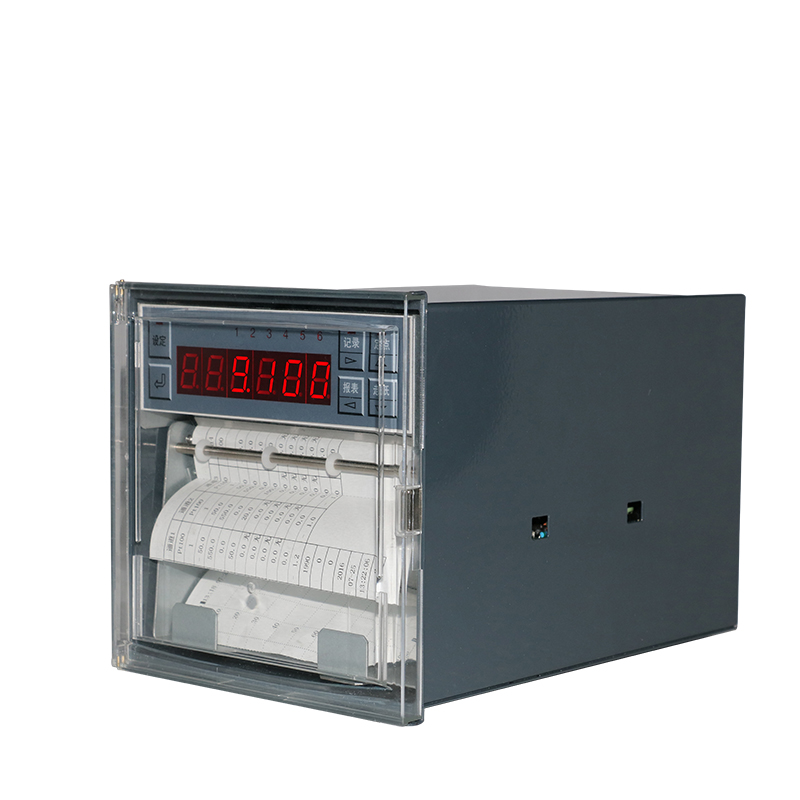
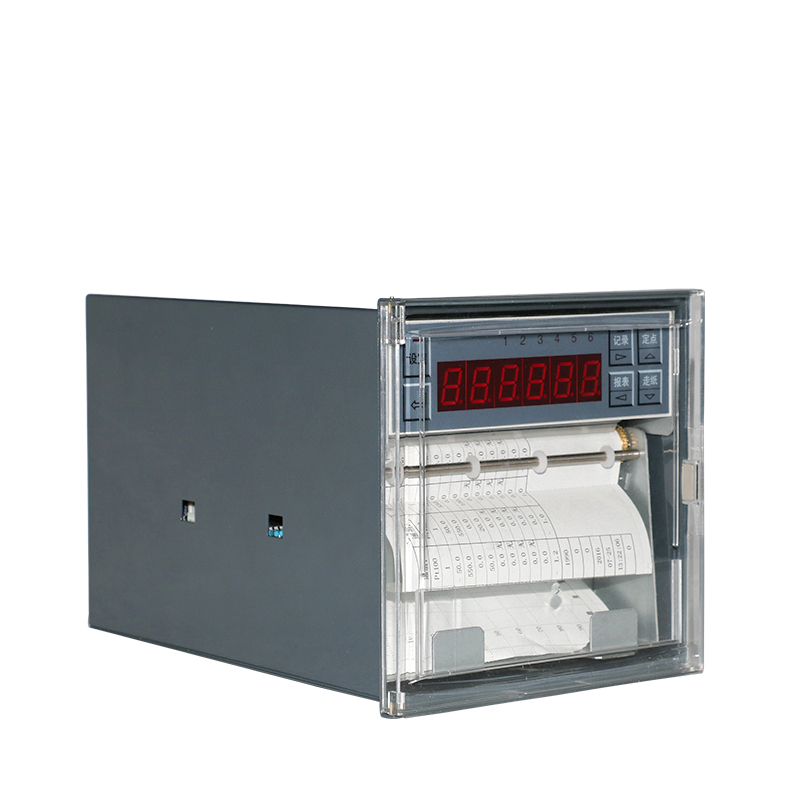
The R1000 data recorder is a multi-channel chart recorder that collects process signals, converts them into measurable values, and continuously prints them onto chart paper. It supports up to 8 input channels, allowing simultaneous monitoring of multiple variables within a single device.
The chart recorder accepts a wide range of industrial signals, including current, voltage, thermocouple, and RTD inputs, making it compatible with common field instruments without additional conversion modules.
Its thermal printing system, controlled by a microprocessor, ensures uninterrupted recording with consistent clarity and precision. Unlike digital-only systems, the printed chart provides an immediate and permanent record of process conditions, which is particularly valuable in regulated or safety-critical environments.
With adjustable chart speed, configurable outputs, and communication options, the R1000 serves as both a local monitoring tool and a data interface within broader control systems.
Working theory
The R1000 chart recorder operates through a coordinated process of signal acquisition, data conversion, and physical recording.
First, the recorder receives analog signals from connected field devices such as transmitters and sensors. These signals may represent temperature, pressure, flow, or other measurable variables and can include current (4–20 mA), voltage, thermocouple, or resistance inputs.
The internal microprocessor converts these analog signals into digital values and scales them into engineering units. Once processed, the data is simultaneously:
-
Displayed on the front panel for real-time observation
-
Transferred to the thermal printing system for continuous chart recording
-
Output or transmitted through communication interfaces if required
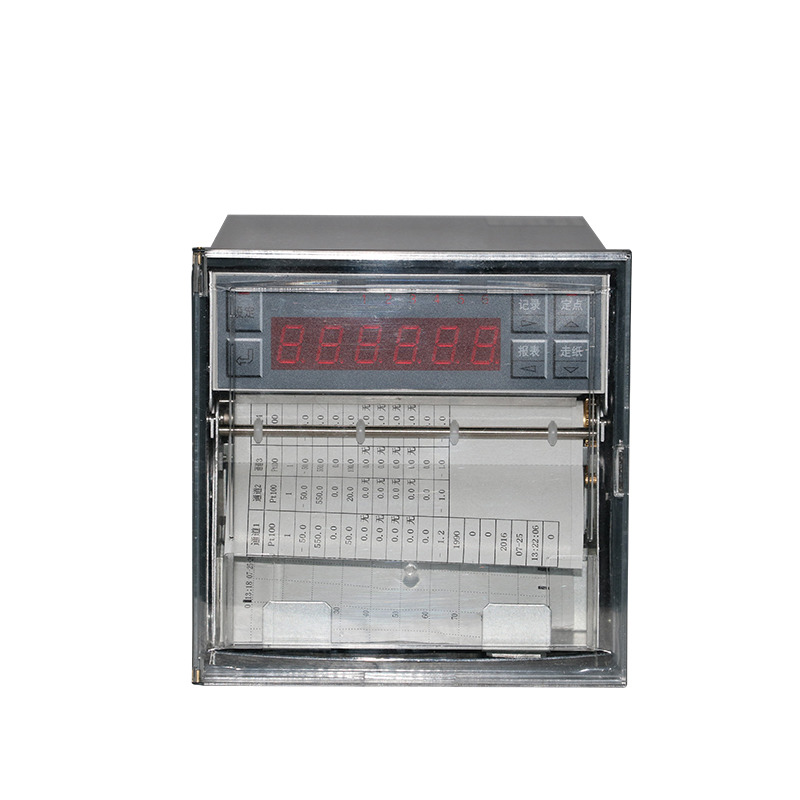
The chart drive mechanism moves paper at a controlled speed (adjustable from low to high), while the thermal print head records the signal trends as continuous lines. This creates a time-based visual record of process behavior that operators can review instantly.
Key features
The R1000 is built to deliver practical, reliable recording in environments where visibility and traceability matter.
- Up to 8 Input Channels: Supports multi-channel data acquisition, enabling simultaneous monitoring of multiple process variables in a single recorder.
- Wide Signal Compatibility: Accepts current, voltage, thermocouple, and RTD inputs, ensuring direct connection with common industrial sensors and transmitters.
- Continuous Thermal Chart Recording: Provides uninterrupted physical recording using a thermal printing mechanism, eliminating the need for ink systems while ensuring clear and consistent output.
- Adjustable Chart Speed: Chart speed can be configured over a wide range, allowing adaptation to both slow-changing and fast-changing processes.
- High Measurement Accuracy: Offers reliable measurement performance with an accuracy of approximately ±0.2% FS, supporting dependable process monitoring.
- Analog Output and Communication Options: Supports current output (4–20 mA) and optional RS232/RS485 communication, enabling integration with external control or monitoring systems.
- Industrial Power Flexibility: Compatible with both 24V DC and 220V AC power supply, making it adaptable to different installation environments.
Specification
| Display | LED display |
| Channel | 1/2/3/4/5/6/7/8 |
| Input | Voltage: (0-5)V/(1-5)V/(0-20)mV/(0-100)mVElectric current : (0-10)mA/(4-20)mAThermocouple: B, E, K, S, T
Thermal resistance: Pt100, Cu50, Cu100 |
| Output | Up to 2 current output channels( 4 to 20mA) |
| Sampling period | 600ms |
| Chart speed | 10mm/h — 1990mm/h |
| Communication | RS 232/RS485 (need Customization) |
| Precision | 0.2%FS |
| Maximum power consumption | Less than 30w |
| Temperature range | 0~50C |
| Humidity range | 0~85 % RH |
| Power source | 220VAC; 24VDC |
| Dimensions | 144 *144 mm |
| Hole size | 138+1* 138+1 mm |
Applications
The R1000 chart recorder is particularly suitable for industries and processes where visible records and on-site monitoring are essential.
Water and wastewater treatment
Provides continuous recording of flow, level, and process signals for operational monitoring and compliance documentation in loads of water and wastewater treatment projects.
Thermal and energy systems
Used in boilers, heat exchangers, and furnaces where temperature trends must be clearly recorded and reviewed.
Chemical and process industries
Ensures traceable recording of critical parameters such as temperature and pressure in production processes.
Manufacturing and industrial equipment
Supports real-time monitoring and troubleshooting by offering immediate visual feedback of process changes.
Laboratories and regulated environments
Physical charts serve as permanent records for audits, validation, and quality control processes.