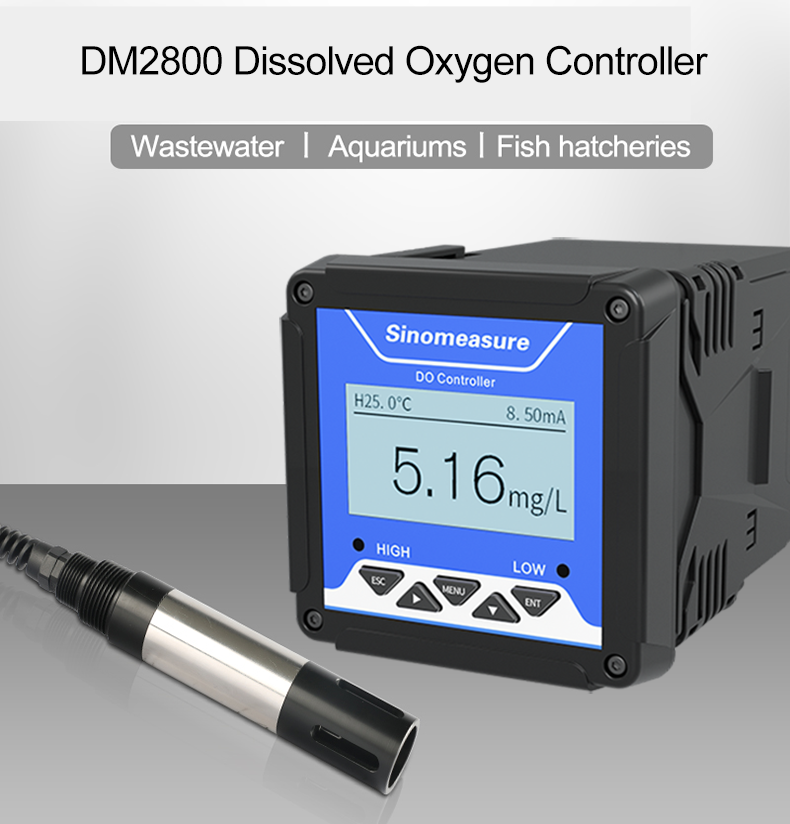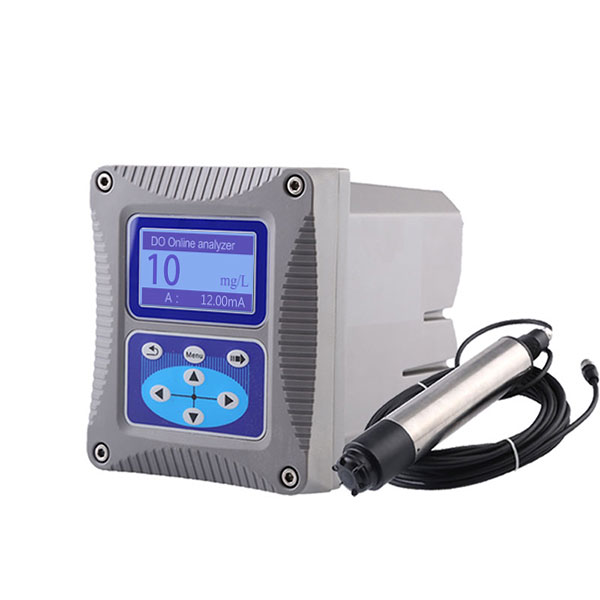

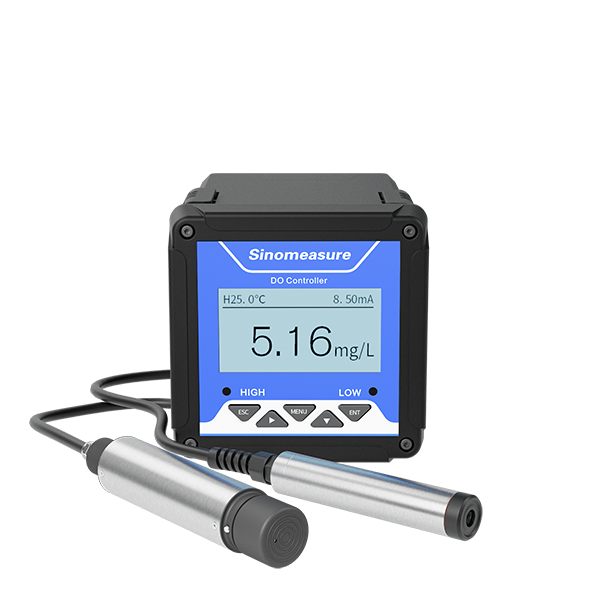
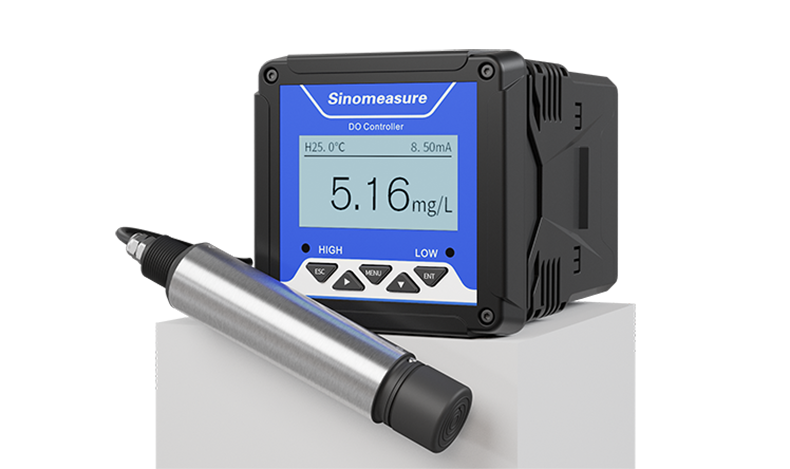
DY3000 Optical Dissolved Oxygen Controller for DO Concentration and Saturation Measuring


Introduction
The DY3000 dissolved oxygen controller utilizes a luminescent optical measurement principle, where light-emitting diodes (LEDs) and a luminescent chemical coating on the sensor cap interact with dissolved oxygen molecules.
When illuminated by a blue LED, the luminescent material emits red light; changes in the intensity and decay time of this light correlate directly with the amount of oxygen present in the solution. From these optical signals, the instrument calculates real-time dissolved oxygen concentration and saturation.
This design avoids consuming oxygen during measurement and offers better stability with lower maintenance compared to traditional electrochemical probes. Equipped with isolated analog and digital outputs, including 4–20 mA, relay control, and RS485 communication with the Modbus-RTU protocol, the DY3000 dissolved oxygen control instrument is suitable for integration into automated monitoring systems across a wide range of industries.
Working principle explained
To help users better understand how accurate dissolved oxygen measurements are achieved, the following section outlines the core working theory of the SUP-DY3000 optical dissolved oxygen meter.
1. Optical excitation of luminescent material
A blue LED light inside the sensor head illuminates a luminescent chemical coating applied to the sensor cap. This material absorbs the excitation light and emits red fluorescence.
2. Interaction with dissolved oxygen molecules
Dissolved oxygen molecules in the solution interact with the luminescent coating by quenching the fluorescence. The greater the oxygen concentration, the shorter and weaker the emitted light becomes. Through precise detection of the light’s intensity and decay time, the dissolved oxygen sensor quantifies the oxygen levels without consuming oxygen during the process.
3. Signal processing and output
The optical response is converted into electrical signals by the analyzer’s internal circuitry. These signals are processed and translated into standard DO values (e.g., mg/L and % saturation), which are then displayed locally and transmitted through analog or digital outputs for external recording, control, or remote monitoring.
Key features
-
Optical sensing: Uses a luminescent coating and LED excitation to measure DO based on fluorescence quenching, providing stable results with minimal sensor drift.
-
Wide measuring parameters: Designed to measure dissolved oxygen concentration, saturation, and oxygen partial pressure across typical environmental and industrial ranges.
-
High resolution: Fine measurement granularity enables precise detection of small changes in DO levels.
-
Multiple output interfaces: Includes isolated 4–20 mA analog output, relay control outputs, and RS485 digital communication supporting Modbus-RTU, which facilitates integration with automation and data acquisition systems.
-
Temperature compensation: Automatic temperature correction supports accurate measurement across varying water temperatures.
-
Configurable alarms: Upper and lower limit alarms with configurable delay can support process control and safety interlocks.
-
LCD: Clear screen presentation of DO, saturation, and temperature helps with onsite verification and operation management.
Specification
| Product | Dissolved Oxygen meter |
| Model | DY3000 |
| Measure range | 0-20mg/L,0-200%, |
| Resolution | 0.01mg/L,0.1%,1hPa |
| Accuracy | ±3%FS |
| Temperature Type | NTC 10k/PT1000 |
| Auto A/manual H | -10-60℃ Resolution;0.1℃ Correction |
| Correction accuracy | ±0.5℃ |
| Output Type 1 | 4-20mA output |
| Max. loop resistance | 750Ω |
| Repeatblitiy | ±0.5%FS |
| Output Type 2 | RS485 digital signal output |
| Communication protocol | Standard MODBUS-RTU(customizable) |
| Power supply | AC220V±10%50Hz,5W Max |
| Alarm relay | AC250V,3A |
Applications
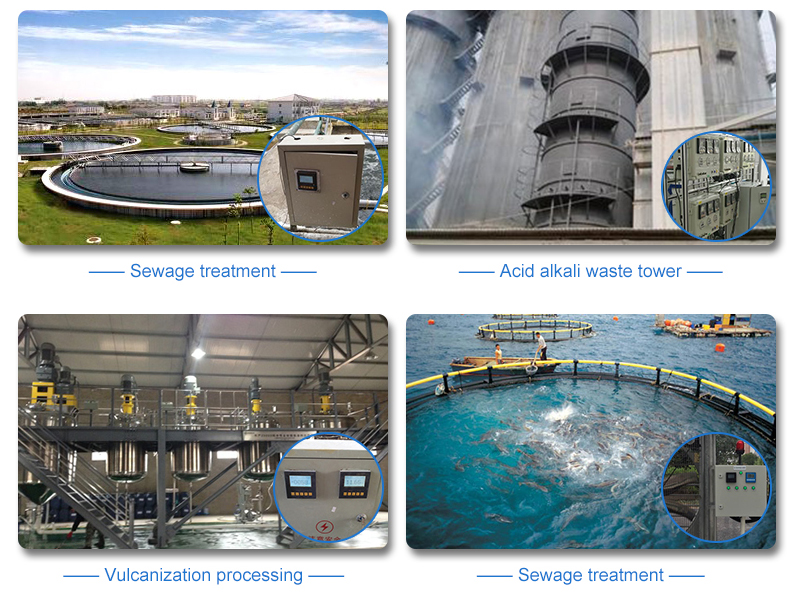
The DY3000 Optical Dissolved Oxygen Controller is widely used for continuous dissolved oxygen monitoring in sectors where water quality and oxygen dynamics are critical:
-
Thermal power plants: Monitoring oxygen levels in cooling water and process circuits to prevent corrosion and ensure efficient heat transfer.
-
Chemical fertilizer production: Tracking dissolved oxygen in process streams to support chemical reactions and product quality control.
-
Environmental protection: Measuring DO in rivers, lakes, and industrial effluent to assess ecological conditions and comply with environmental regulations.
-
Metallurgy: Controlling oxygen content in water used for cooling and cleaning in metal processing applications.
-
Pharmaceutical and biochemical industries: Ensuring dissolved oxygen is maintained within specified limits in biological and chemical manufacturing processes.
-
Food & Water treatment: Verifying oxygen levels for quality assurance, corrosion control, and process optimization in potable water and food production systems.