




Turbidity Sensors Explained: Principles, Types, and Applications in Modern Water Monitoring
Water clarity is more than a visual indicator; instead, it is a critical parameter for evaluating water quality, process stability, and environmental compliance. Across municipal treatment plants, industrial processes, and environmental monitoring systems, turbidity sensors play a central role in translating water clarity into measurable, actionable data.
This article provides a practical and technical overview of turbidity sensors, explaining what turbidity sensors are, how they work, how to use them, and how to select the right type for different applications.
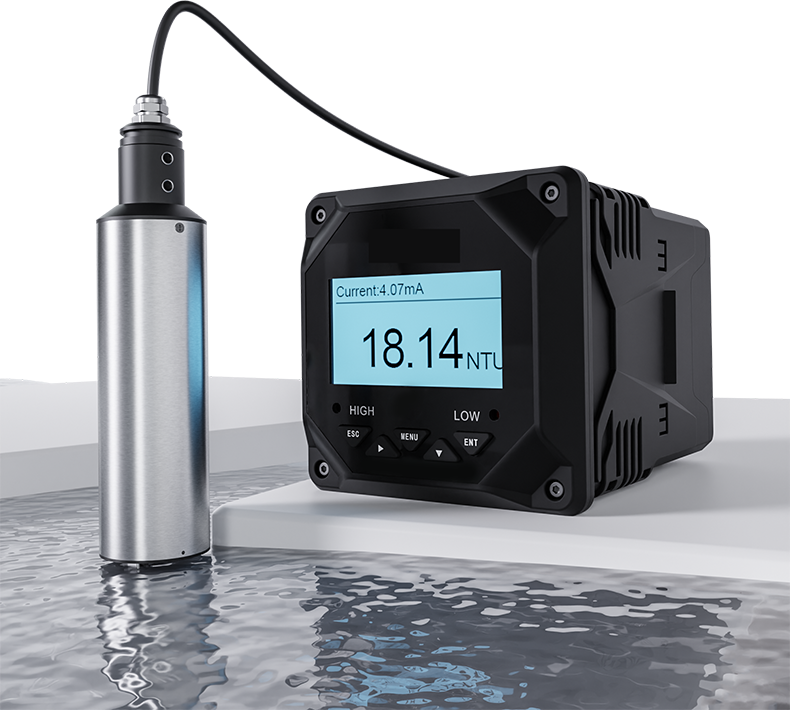
What Is a Turbidity Sensor?
A turbidity sensor is an analytical instrument used to measure the cloudiness or haziness of a liquid caused by suspended particles such as silt, organic matter, microorganisms, or industrial solids. Instead of directly counting particles, the sensor evaluates how these particles interact with light.
In water and wastewater systems, turbidity sensors are widely used as real-time indicators of filtration efficiency, treatment performance, and water quality trends. While turbidity itself is not a contaminant, changes in turbidity often correlate with process upsets or water quality risks.
How Does a Turbidity Sensor Work?
Understanding the turbidity sensor working principle is key to selecting and applying the technology correctly. Most often, the modern turbidity sensors operate based on optical measurement, using light interaction with suspended particles; even though there are two different measuring methods - galvanic and polarographic methods. Here, let’s see how the common turbidity sensor works:
In a turbidity sensor, measurement begins when a built-in light source, typically infrared or visible light, is emitted into the water sample.
As the light passes through the liquid, suspended particles scatter, absorb, or attenuate the light depending on their size, shape, and concentration. One or more photodetectors positioned at specific angles then capture the scattered or transmitted light.
Finally, the sensor’s internal electronics process this optical signal and convert the detected light intensity into an electrical output that is directly proportional to the turbidity level of the water.
This optical approach makes the turbidity optical sensor suitable for continuous online monitoring, especially where rapid response and stability are required.
Measuring Units of Turbidity
Turbidity is expressed in standardized units that describe the optical response rather than particle mass. Here are the most common turbidity measuring units within reach:
1. NTU (Nephelometric Turbidity Unit)
NTU is the most commonly used unit, which is based on light scattered at a 90° angle.
2. FNU (Formazin Nephelometric Unit)
This one is similar to NTU but typically used with infrared light sources in accordance with ISO standards.
3. FTU (Formazin Turbidity Unit)
FTU is an older term, largely replaced by NTU and FNU in modern standards.
The choice of unit depends on measurement standards, sensor design, and regulatory requirements.
How to Use a Turbidity Sensor?
While installation details vary by model, most water turbidity sensors follow a similar operational workflow. Below explores the frequent steps once you get the turbidity sensor for your liquid process:
Step 1: Installation
Based on your process scene, the sensors can be installed in pipelines, flow cells, immersion assemblies, or open channels for further smooth operation.
Step 2: Calibration
Standard reference solutions are used to calibrate the turbidity sensor to ensure accuracy across the measurement range.
Step 3: Measurement and Output
The sensor continuously measures turbidity and outputs data via analog or digital signals to controllers, PLCs, or monitoring systems.
Step 4: Maintenance
Periodic cleaning of the optical window is essential to prevent fouling-related measurement drift. Proper installation and maintenance are just as important as sensor selection when aiming for stable, long-term data.
Common Types of Turbidity Sensors: How to Select a Turbidity Sensor
Turbidity sensors are available in several designs, each optimized for different measurement conditions and application requirements. Understanding the main sensor types helps ensure reliable readings, lower maintenance effort, and better long-term performance.
Nephelometric turbidity sensors measure turbidity by detecting light scattered at a 90-degree angle from the incident beam. This method aligns with international standards such as ISO 7027 and is widely used for drinking water, wastewater treatment, and environmental monitoring where accuracy at low turbidity levels is critical.
Transmission-type turbidity sensors determine turbidity by measuring how much light passes directly through the water sample. As turbidity increases, less light reaches the detector. This approach is well suited for high-turbidity applications such as sludge treatment, mining processes, and industrial effluent monitoring, where particle concentrations are relatively high.
Optical backscatter sensors detect light reflected backward by suspended particles. These sensors are commonly used for measuring suspended solids (TSS or MLSS) in wastewater and process control environments. Their robust design allows stable operation in harsh conditions and high solid concentrations.
When selecting a turbidity sensor, several practical factors should be considered. The expected turbidity range is critical, as low-range monitoring requires higher sensitivity, while high-range applications demand strong resistance to signal saturation. Installation conditions, such as immersion depth, flow stability, and fouling risk, also influence sensor choice.
In addition, maintenance capability, calibration frequency, output signals, and compatibility with control systems should align with the overall process automation requirements.
By matching the sensor type to the actual application conditions, you can achieve more accurate turbidity measurements, reduce maintenance workload, and improve overall monitoring reliability.
Common FAQs about Turbidity Sensors
Below are some common questions that you might want to know about the process of exploring the turbidity sensors:
1. What is the acceptable turbidity level for drinking water?
Turbidity levels below 1 NTU are generally considered acceptable for drinking water.
2. Can turbidity affect aquatic life?
Yes, high turbidity levels can negatively impact aquatic life by reducing light penetration and disrupting ecosystems.
3. Are turbidity sensors suitable for online monitoring?
Yes, many turbidity sensors are designed for online monitoring and can provide real-time data.
4. Can turbidity sensors detect dissolved substances?
No, turbidity sensors specifically measure suspended particles and cannot detect dissolved substances.
5. What is the impact of turbidity on UV disinfection?
High turbidity levels can interfere with UV disinfection, reducing its effectiveness in treating waterborne pathogens.
6. How often should turbidity sensors be calibrated?
Turbidity sensors should be calibrated according to the manufacturer’s guidelines, typically every 3 to 6 months.
Post time: Jan-26-2026